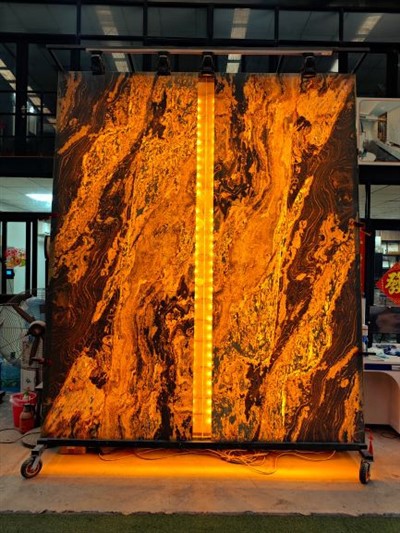
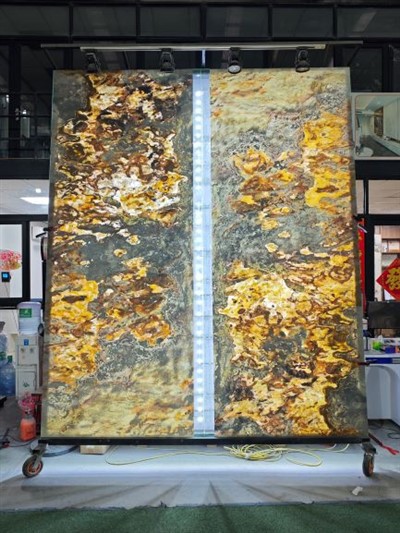
For most uses, thin stone veneers usually do not need for extra structural support; nonetheless, their viability relies on the installation site, kind of substrate, and stone thickness. This is a thorough dissection:

1. Weight Concerns
Thin Stone Veneer: Usually weighing 10–15 pounds per square foot (vs. 100+ lbs./sq.ft. for full-thickness stone), thin stone veneers are light enough for most walls and ceilings.
Strength of Substratum:
Usually robust enough without reinforcement, **concrete/bricks**
Drywall/Wood-Frame Walls:
If the wall studs are correctly spaced-that is, sixteen inches on center-lightweight stone, say ½' thickness, is usually safe.
Avoid large stone on unsupported plasterboard ceilings; for high-traffic or load-bearing areas, see a structural engineer.
2. When Additional Support May Be Required
Particularly on ceilings or non-load-bearing walls, stones thicker than one inch might call for reinforcing.
High-wind settings-such as coastal cities like Xiamen-may need metal brackets or anchors to fasten the veneer.
For stucco or uneven substrates, equally distribute weight using a lath and scratch coat(a wire mesh buried in mortar).
Large-Scale Installations:
See a structural engineer to make sure the current structure can manage loads for walls more than ten feet in height or covering vast regions.
3. Common Reinforcement Methods
Attached to the substrate to provide a stable basis for mortar, Metal Lath
Made in concrete or masonry, epoxy anchors hold hefty stones in place.
For moist regions or heavy stone, cementitious boards-such as Durock-can strengthen plasterboard.
4. Manufacturer Guidelines
Always use the advice of the stone supplier. For instance, Veneer Stone: Many producers list installation techniques and maximum weight limitations.
Products like the panels made by Eldorado Stone often have incorporated supports for easy installation.
5. Professional Consultation
See a structural engineer or masonry specialist to evaluate load-bearing capability for ceilings, curving surfaces, or restorations in historic structures.
Give corrosion-resistant anchoring and waterproofing first priority in coastal regions like Xiamen to help to reduce environmental stress.
For most surfaces without further support, thin stone veneer is usually safe; but, structural integrity should be guaranteed by considering weight, position, and substrate strength.