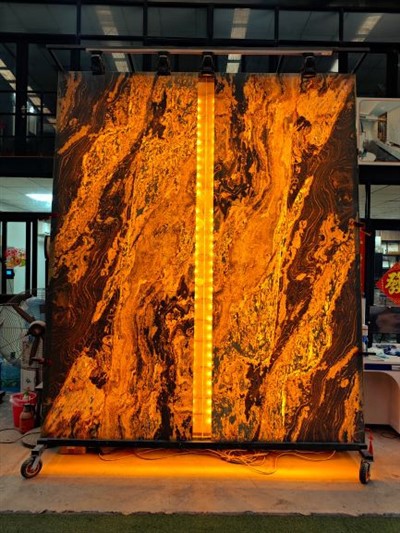
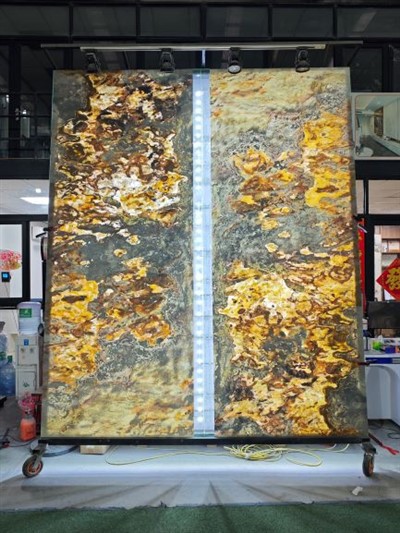
Technological developments are greatly improving the thin stone veneer manufacture in numerous important spheres:

1. Eco-friendly Production and Sustainable Development
Modern manufacturing methods maximise production processes, thus lowering energy consumption and waste in the creation of thin stone veneer, so increasing its environmental friendliness.
In an increasing number of thin stone veneer and fake stone veneer products, recycled materials such as recycled glass, recycled concrete, and natural stone powder are employed, hence minimising their carbon footprint.
Low-Volatile Organic Compounds (VOC) or non-toxic coatings are increasingly used in thin stone veneer products to satisfy increased indoor environmental health criteria. They are thus especially appropriate for areas like kitchens and toilets where rigorous air quality standards apply.
2. Enhanced Quality and Production Efficiency
The advent of automation and artificial intelligence has greatly raised production efficiency and stabilised product quality in thin stone veneer manufacture.
More exact manufacture of thin stone veneer made possible by the use of computer numerical control (CNC) technology and 3D printing helps to enable intricate patterns and tailored designs.
New ultra-thin stone (with a thickness of only 1-3mm) and flexible stone veneer not only lightens weight but also improve installation flexibility and applicability by means of their development.
3. Design and Innovational Application
Modern thin stone veneer products are often moving towards bigger, seamless panels that minimise seams and improve general looks and durability.
Modular thin stone veneer solutions have been created to preserve design integrity while also enabling seamless in-house and quick installation.
Digital modelling and augmented reality (AR)/virtual reality (VR) technologies enable designers and customers to see the finished effect before installation and customise patterns and textures based on their demand.
4. Enhanced Performance
Advanced coating and treatment methods have further enhanced the durability, fire resistance, and water resistance of thin stone veneer, thus better suited for both interior and outdoor applications.
Thin stone veneer may eventually include smart technology and self-healing properties to save maintenance expenses.
5. Market and Application Expansion
Because they are lightweight, visually beautiful, and simple to install, thin stone veneers are extensively utilised for both interior and exterior decoration in residential, commercial, and public structures.
More projects are using thin stone veneers, which are more ecologically friendly and sustainable, as green construction ideas gain increasing appeal.
These technical advances have not only raised the quality and manufacturing efficiency of thin stone veneers but also broad their range of uses, thereby boosting their competitiveness in modern architecture and décor.