
How to Prevent Efflorescence and Moisture Problems Behind Thin Stone Veneer Walls

White marks on a stone wall can be frustrating, especially after a new project has just been completed. When this happens with thin stone veneer, the first question is often: Is there something wrong with the stone?
Not necessarily. In many cases, the problem is related to moisture moving through the wall or adhesive layer rather than the natural stone surface itself.
What Causes White Marks on Thin Stone Veneer?
Efflorescence appears as a white or powdery deposit on the surface of stone.
It can happen when moisture moves through cement-based materials or other parts of the wall system. The moisture may carry soluble salts toward the surface. Once the water evaporates, the salts can remain behind as white marks.
This is why moisture control is important when installing thin stone veneer walls.

How Can You Reduce the Risk?
Good preparation before installation can make a big difference.
The substrate should be clean, dry, and suitable for the selected adhesive. The adhesive should also be appropriate for natural stone and the specific application.
For exterior walls, the complete wall system needs to be considered, including the substrate, adhesive, and protection from water exposure.
One important point is that natural stone veneer is not a waterproofing layer by itself. Waterproofing should be handled as part of the overall wall construction where required.
Can 2mm Thin Stone Veneer Be Used Outdoors?
It can be used for certain exterior applications, but the suitability depends on the stone, substrate, adhesive, and installation system.
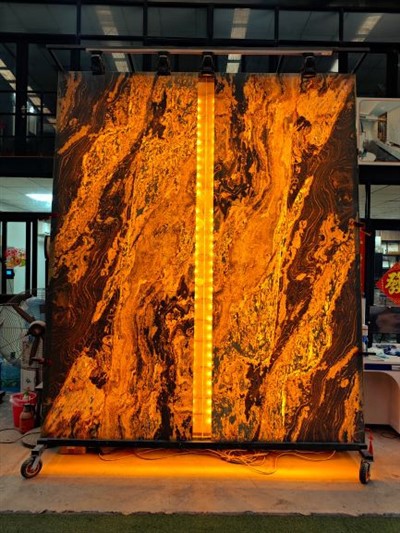
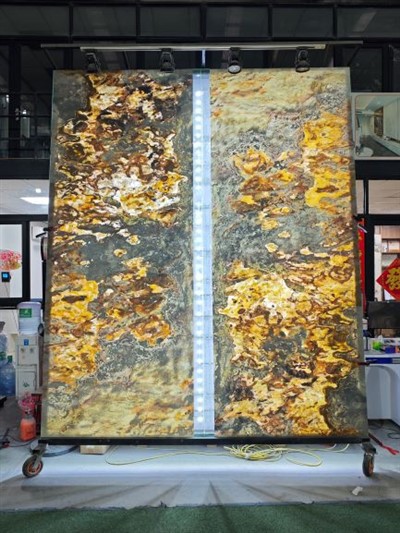
Our natural thin stone veneer is available in approximately 1–3 mm thickness, with 2 mm being a common option. The visible surface remains natural stone, so natural variation in color, texture, and pattern should also be expected from sheet to sheet.
For an exterior project, it is always better to confirm the installation method with the project installer before ordering.
Tip: For exterior projects, always consider the stone, substrate, adhesive, and overall wall system together rather than evaluating the stone thickness alone.
What Should Buyers Check Before Ordering?
For wholesale or project orders, we recommend checking more than just the stone pattern and price.
Before placing an order, ask about:
- Stone type and natural surface
- Thickness and weight
- Standard sheet sizes
- Recommended installation method
- Interior or exterior suitability
- Natural variation between sheets
- Sample availability
- Packaging for long-distance transportation
For large projects, checking samples before production or bulk purchasing is especially useful. Natural stone is a natural material, so the actual sheets may have variations that cannot be fully shown in a single product photo.

A Practical Approach to Thin Stone Veneer
Efflorescence is usually related to moisture and the installation system, rather than simply the thickness of the stone.
For buyers sourcing thin stone veneer walls, choosing the right product is only one part of the process. The substrate, adhesive, installation conditions, and intended application should all be considered together.
If you are sourcing 2mm natural stone veneer for a project or wholesale order, reviewing samples and installation requirements with the supplier before ordering can help avoid unnecessary problems later.
FAQ
1. What causes white marks on thin stone veneer?
They can be caused by soluble salts carried to the stone surface by moisture. After the moisture evaporates, the salts may remain as white deposits.
2. How can I prevent efflorescence on natural stone veneer?
Start with a suitable, dry substrate and the correct adhesive. For exterior applications, consider the complete wall system and water exposure.
3. Does thin stone veneer absorb moisture?
Natural stone can interact with moisture differently depending on the stone type. The installation system is therefore important when evaluating moisture performance.
4. Can 2mm thin stone veneer be used outdoors?
Yes, for certain applications. The suitability depends on the stone, substrate, adhesive, and complete installation system.
5. What should I check before buying thin stone veneer wholesale?
Check the stone type, thickness, standard sizes, application recommendations, samples, natural variation, and packaging before placing a bulk order.