How to Choose the Right Adhesive for Flexible Thin Stone Veneer?
Choosing the right adhesive is one of the most important decisions when installing flexible thin stone veneer. The stone itself may look excellent, but an unsuitable adhesive can cause debonding, edge lifting, cracking, staining, or installation failure-especially in large commercial projects and demanding climates.
For importers, distributors, contractors, and project buyers, adhesive selection should therefore be treated as part of the complete flexible stone veneer system, not as an afterthought.
In this guide, we explain how experienced buyers evaluate an adhesive for flexible stone sheet, how substrate and environmental conditions affect adhesive selection, and which common purchasing mistakes should be avoided when sourcing natural thin stone veneer 2mm thick, real stone veneer sheets, and other stone sheet products.
Why Adhesive Selection Matters for Flexible Thin Stone Veneer
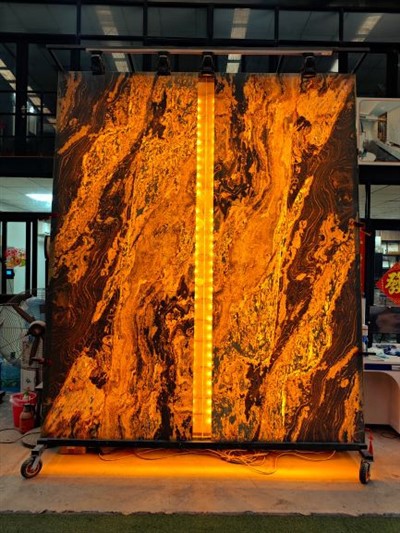
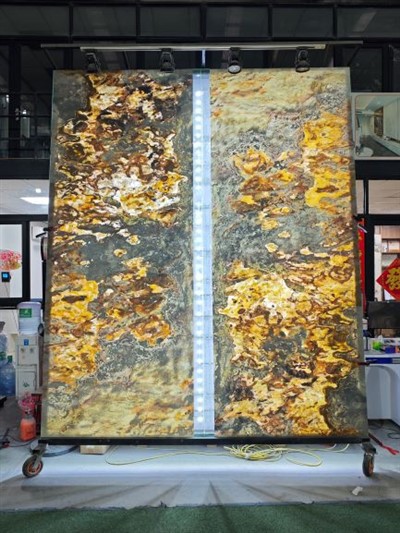
Unlike conventional stone panels, flexible thin stone veneer is lightweight and relatively thin. Many products are manufactured by separating a natural stone surface from a supporting layer, resulting in a material that can conform to slightly curved surfaces while maintaining the appearance of real stone.
This construction creates a different installation requirement.
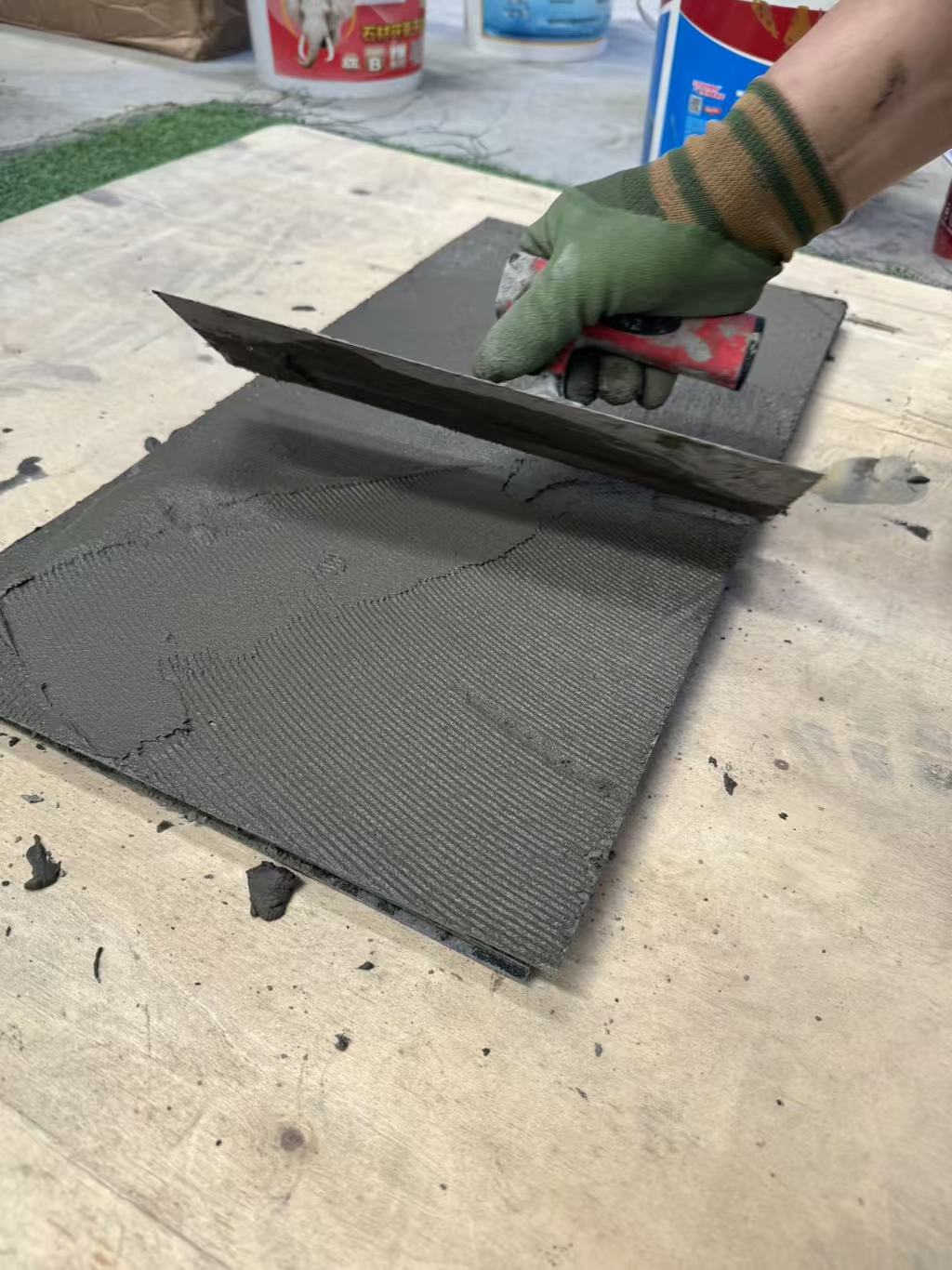
A conventional cement-based adhesive designed for thick ceramic tiles or heavy stone slabs may not automatically provide the flexibility, adhesion, open time, or compatibility required for thin stone veneer.
For B2B buyers, the key question is not simply:
"Which adhesive has the strongest bonding strength?"
The better question is:
"Which adhesive provides stable bonding between this particular stone veneer, substrate, and application environment over the expected service life?"
That distinction is critical.
The Five Factors to Consider When Choosing an Adhesive
1. Substrate Compatibility
Before selecting an adhesive, identify the substrate.
Common substrates include:
- Concrete
- Cement board
- Fiber-cement board
- Gypsum board
- Plywood or engineered wood
- MDF in suitable interior applications
- Existing tiles
- Metal or specially prepared surfaces
- Painted or coated surfaces
The adhesive manufacturer should specify whether the product is suitable for the intended substrate.
For example, an adhesive that performs well on porous concrete may not provide the same result on a low-absorption or smooth surface.
Professional purchasing tip: Always request the adhesive technical data sheet (TDS) and installation instructions rather than relying only on the product name or salesperson's recommendation.
2. Flexibility and Movement Resistance
This is particularly important for flexible stone veneer sheets.
Buildings naturally experience small amounts of movement caused by:
- Temperature changes
- Humidity fluctuations
- Structural movement
- Substrate expansion and contraction
- Transportation or handling
- Vibration
If the adhesive forms a very rigid bond while the substrate moves, stress can accumulate at the interface.
For this reason, an adhesive with appropriate flexibility and movement tolerance is often preferable to an extremely rigid adhesive.
However, "flexible" should not simply mean "soft."
The adhesive still needs sufficient cohesive strength, adhesion, and dimensional stability for the application.
3. Moisture and Water Exposure
Interior decorative walls and exterior façades should not automatically use the same adhesive specification.
Consider whether the project will be exposed to:
- Rain
- High humidity
- Freeze-thaw cycles
- Direct sunlight
- Pool or spa environments
- Frequent cleaning
- Condensation
- Water behind the veneer
For exterior projects, the complete system-including substrate preparation, adhesive, joints, flashing, drainage, and detailing-must be evaluated.
A waterproof-looking surface does not necessarily mean the entire installation is waterproof.
This is one of the most common mistakes made when buyers evaluate thin stone products solely from samples.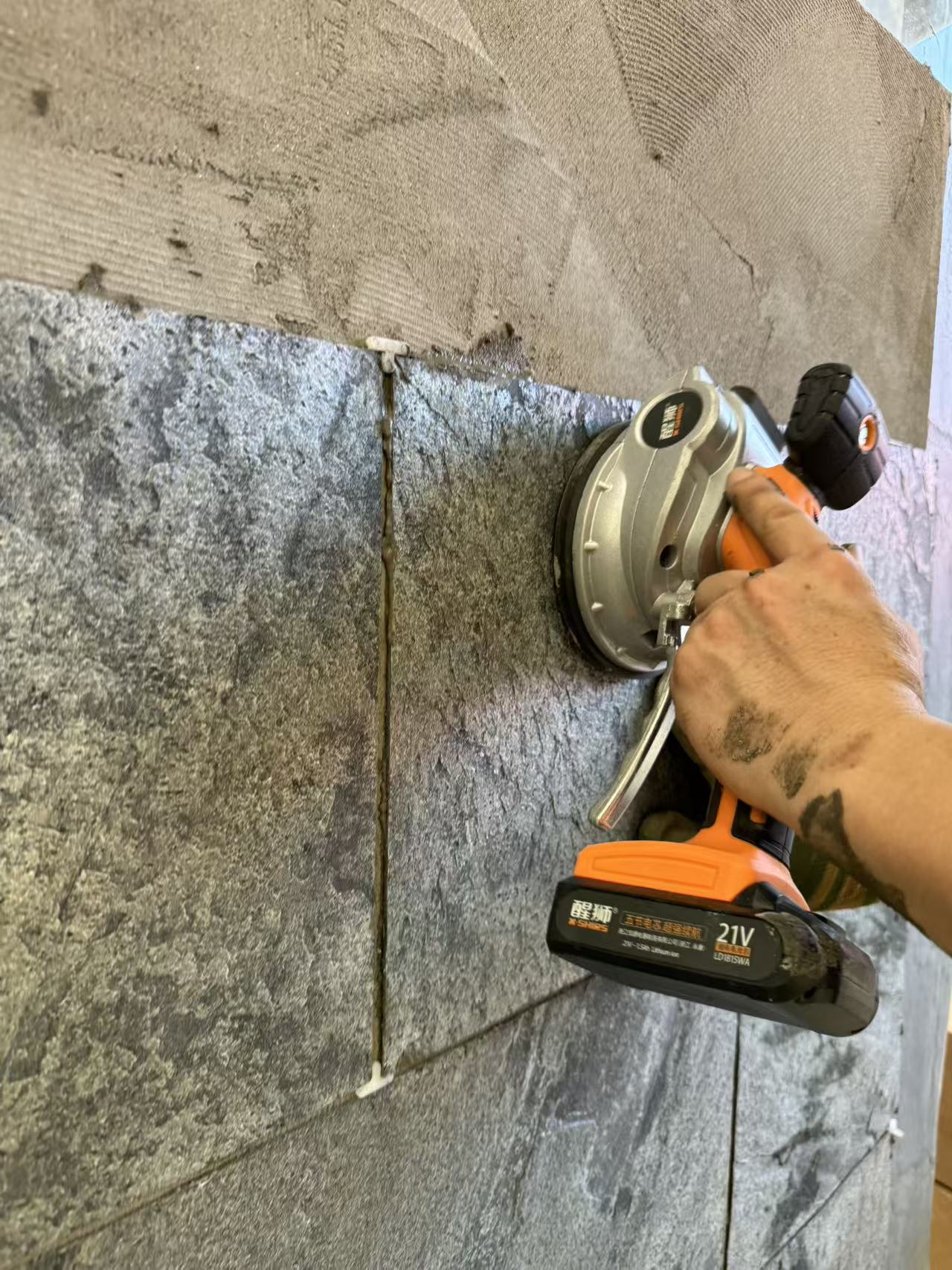
What Type of Adhesive Is Suitable for Flexible Stone Sheet?
There is no universal adhesive that is ideal for every application.
The appropriate choice depends on the veneer construction, substrate, environment, panel size, and installation method.
| Adhesive Type | Typical Characteristics | Common Considerations |
|---|---|---|
| Cementitious tile adhesive | Mineral-based, widely available | Requires correct grade and substrate; may be unsuitable for certain flexible applications |
| Polymer-modified adhesive | Improved adhesion and flexibility | Often more suitable for demanding substrates |
| MS polymer adhesive | Flexible, good adhesion to various surfaces | Check compatibility, curing conditions, and exterior suitability |
| PU adhesive | Strong adhesion and flexibility | Moisture sensitivity and application conditions must be evaluated |
| Epoxy adhesive | High chemical and mechanical resistance | Usually less forgiving and may be unnecessary for standard wall applications |
| Manufacturer-approved proprietary adhesive | Formulated or tested for a specific veneer system | Best option when system compatibility has been verified |
The important point is that adhesive selection should be based on tested compatibility rather than adhesive category alone.
 How to Evaluate Adhesive Compatibility With 2mm Natural Stone Veneer
One important long-tail search term in this category is natural thin stone veneer 2mm thick.
A 2mm stone surface behaves differently from conventional 10–20mm natural stone panels.
Its low thickness provides significant weight savings, but it also means the adhesive layer and substrate have a greater influence on the overall installation performance.
Key parameters to check
When evaluating an adhesive for thin natural stone veneer, request information about:
- Bond strength
- Tensile adhesion
- Shear adhesion
- Open time
- Working time
- Curing time
- Temperature resistance
- Moisture resistance
- UV/weathering suitability
- Substrate compatibility
- Maximum recommended application thickness
- Recommended trowel or application method
For large projects, buyers should also ask whether the adhesive has been tested with the actual veneer construction, rather than simply being advertised as suitable for "stone."
Real Stone Veneer Sheets vs. Conventional Stone Panels
Real stone veneer sheets can provide the appearance of natural stone while substantially reducing weight and material consumption compared with conventional stone panels.
This creates advantages for:
- Interior feature walls
- Hospitality projects
- Retail environments
- Residential developments
- Furniture and cabinetry
- Curved surfaces
- Lightweight renovation projects
- Commercial wall finishes
However, the lightweight construction does not eliminate the need for proper installation.
A buyer should evaluate three components together:
Stone veneer + adhesive + substrate
If any one of these is inappropriate, the final installation can become unreliable.
Common Adhesive Selection Mistakes
Mistake 1: Choosing the Cheapest Adhesive
For large-volume purchasing, price is obviously important.
However, adhesive cost should be calculated based on total installed cost, not simply price per kilogram.
Suppose an inexpensive adhesive causes:
- Higher consumption
- Longer installation time
- More substrate preparation
- Higher failure rates
- Reinstallation costs
- Project delays
The apparent saving can disappear quickly.
For commercial projects, the correct question is:
"What adhesive provides the required performance at the lowest reliable installed cost?"
Mistake 2: Assuming Stronger Always Means Better
Maximum bond strength is not the only performance indicator.
An adhesive can have high initial strength but still be unsuitable if it cannot accommodate substrate movement or environmental changes.
For flexible stone veneer, the balance between:
adhesion + flexibility + dimensional stability + environmental resistance
is generally more meaningful than one isolated strength number.
Mistake 3: Ignoring Substrate Preparation
Even a high-performance adhesive cannot compensate for a contaminated or unstable substrate.
Before installation, the surface may need to be:
- Clean
- Dry or within the adhesive manufacturer's specified moisture range
- Structurally sound
- Free from dust
- Free from oil and grease
- Free from loose coatings
- Properly leveled
Highly porous surfaces may require appropriate priming or preparation.
Smooth surfaces may require mechanical preparation or a compatible primer.
Always follow the adhesive manufacturer's preparation requirements.
Mistake 4: Testing Only the Stone Sample
A small showroom sample is useful for evaluating color, texture, and appearance-but it does not prove long-term adhesive compatibility.
For serious B2B projects, conduct a mock-up test using:
- The actual flexible stone veneer
- The actual adhesive
- The actual substrate
- The intended installation method
- Representative environmental conditions where practical
For large commercial orders, this simple procedure can prevent expensive problems later.
A Practical Adhesive Selection Process for B2B Buyers
A professional procurement process can be simplified into six steps.
Step 1: Define the Application
Determine whether the stone sheet will be used indoors, outdoors, on walls, ceilings, furniture, curved surfaces, or other applications.
Step 2: Identify the Substrate
Confirm the exact substrate rather than simply stating "wall."
Step 3: Confirm Environmental Conditions
Record expected temperature, humidity, water exposure, UV exposure, and freeze-thaw conditions where applicable.
Step 4: Review Technical Documentation
Ask for:
- TDS
- SDS where applicable
- Application instructions
- Coverage information
- Recommended substrate
- Curing conditions
- Storage requirements
- Shelf life
Step 5: Conduct a Bonding Test
Test the actual veneer and adhesive combination on the actual or representative substrate.
Step 6: Standardize the Installation Method
Once the system is approved, document:
- Surface preparation
- Primer requirements
- Adhesive application
- Trowel specification
- Veneer positioning
- Pressure/rolling method
- Open time
- Curing time
- Joint treatment
This becomes particularly important when an importer or distributor supplies the product to multiple installers.
What Should Importers Ask a Flexible Stone Veneer Supplier?
Experienced buyers should not evaluate a stone sheet supplier only by FOB price.
A reliable supplier should be able to discuss the product's construction and installation requirements in technical terms.
Ask the following questions:
Product Construction
- Is the surface real natural stone?
- What is the approximate stone thickness?
- What is the backing material?
- What is the total thickness?
- What is the weight per square meter?
- How consistent are thickness and dimensions?
Adhesive Compatibility
- Which adhesive is recommended?
- Has the adhesive been tested with the specific veneer construction?
- Is the system suitable for interior and exterior applications?
- What substrates are approved?
- Is a primer required?
Quality Control
- How are thickness and dimensions controlled?
- How is color variation managed?
- How is bonding between the stone and backing controlled?
- Are batch records maintained?
- Can samples from production lots be provided?
Commercial Supply
- What is the MOQ?
- What is the standard lead time?
- Can packaging be customized?
- Can private-label/OEM orders be supported?
- What are the standard payment terms?
For distributors, these questions are often more valuable than simply asking, "What is your best price?"
Application Case: Why a Mock-Up Test Matters
Imagine a contractor is installing flexible stone veneer on a commercial reception wall.
The substrate is gypsum board with a specific primer. The veneer is a real stone sheet approximately 2mm thick. The contractor chooses an adhesive based only on its high bond strength.
During installation, the adhesive initially appears excellent.
Several weeks later, temperature and humidity changes cause slight movement between the substrate and veneer. Areas with insufficient adhesive coverage begin to show localized lifting.
The issue may not be the natural stone itself.
It may be the combination of:
substrate + adhesive + coverage + curing conditions + environmental movement.
This is why professional projects should validate the complete installation system before mass installation.
Future Purchasing Strategy: Buy the System, Not Just the Stone
As the flexible stone industry develops, B2B buyers are increasingly looking beyond appearance and unit price.
The future purchasing model is likely to focus more heavily on:
- Traceable quality control
- Consistent product construction
- Tested installation systems
- Technical documentation
- Application-specific adhesive recommendations
- Batch consistency
- OEM/private-label capability
- Stable international supply
- Installation training and technical support
For importers and distributors, a supplier capable of providing both product knowledge and installation guidance can significantly reduce downstream technical risk.
The most important principle is simple:
Do not select an adhesive because it is marketed for stone. Select it because its performance has been verified for your specific flexible stone veneer, substrate, and application environment.
FAQ: Flexible Thin Stone Veneer Adhesive and Purchasing
1. What adhesive is recommended for flexible stone veneer sheets?
The appropriate adhesive depends on the veneer construction, substrate, and application environment. Polymer-modified, MS polymer, PU, or other specialty adhesives may be suitable depending on the project. Buyers should follow the veneer manufacturer's tested recommendation and conduct a compatibility test before large-scale installation.
2. Can flexible stone veneer be installed with ordinary tile adhesive?
Some tile adhesives may be compatible, but ordinary tile adhesive should not be assumed suitable simply because the product is a wall covering. The adhesive must provide appropriate adhesion, flexibility, coverage, and environmental resistance for the specific flexible stone veneer and substrate.
3. How can buyers verify the quality of real stone veneer sheets?
Request product specifications, construction details, batch information, samples, and quality-control documentation. For commercial projects, evaluate the actual production sample rather than relying only on catalog photographs. A mock-up installation can also help verify appearance, adhesion, handling, and installation performance.
4. What is the typical MOQ and lead time for flexible stone veneer?
MOQ and lead time vary according to product type, stone selection, size, packaging, customization, and order quantity. Standard products generally have simpler production planning, while OEM colors, private-label packaging, special dimensions, and customized specifications may require additional time.
5. Can flexible stone veneer suppliers provide customized products and packaging?
Many professional manufacturers can support customized dimensions, stone selections, packaging, labels, cartons, and OEM/private-label requirements. Buyers should confirm the customization scope, MOQ, sample approval procedure, production lead time, and quality-control process before placing a bulk order.
Request a Flexible Stone Veneer Sample and Technical Specification
Choosing the right adhesive is only one part of achieving a reliable flexible stone installation. The stone veneer construction, substrate, adhesive, installation method, and environmental conditions must work together as one system.
If you are sourcing flexible stone veneer sheets, real stone veneer sheets, natural thin stone veneer 2mm thick, or stone sheet products for distribution or a commercial project, request the product specification, sample, recommended adhesive information, MOQ, lead time, and OEM options before making your purchasing decision.
For buyers evaluating life1996 adhesive flexible thin stone veneer, the most efficient next step is to submit your project requirements and target application so the appropriate veneer and adhesive system can be reviewed before bulk production.
```